The Rise of Intelligent Meeting Agents
The global market for AI meeting assistants has surged past $3 billion, with a significant number of companies planning to deploy these solutions in the coming year. This growth isn't just about more features; it represents a profound evolution in how artificial intelligence supports meetings. We are moving beyond simple transcription and basic analytics to a new era where AI functions as an active agent, fundamentally reshaping enterprise collaboration.
From Passive Features to Proactive Support
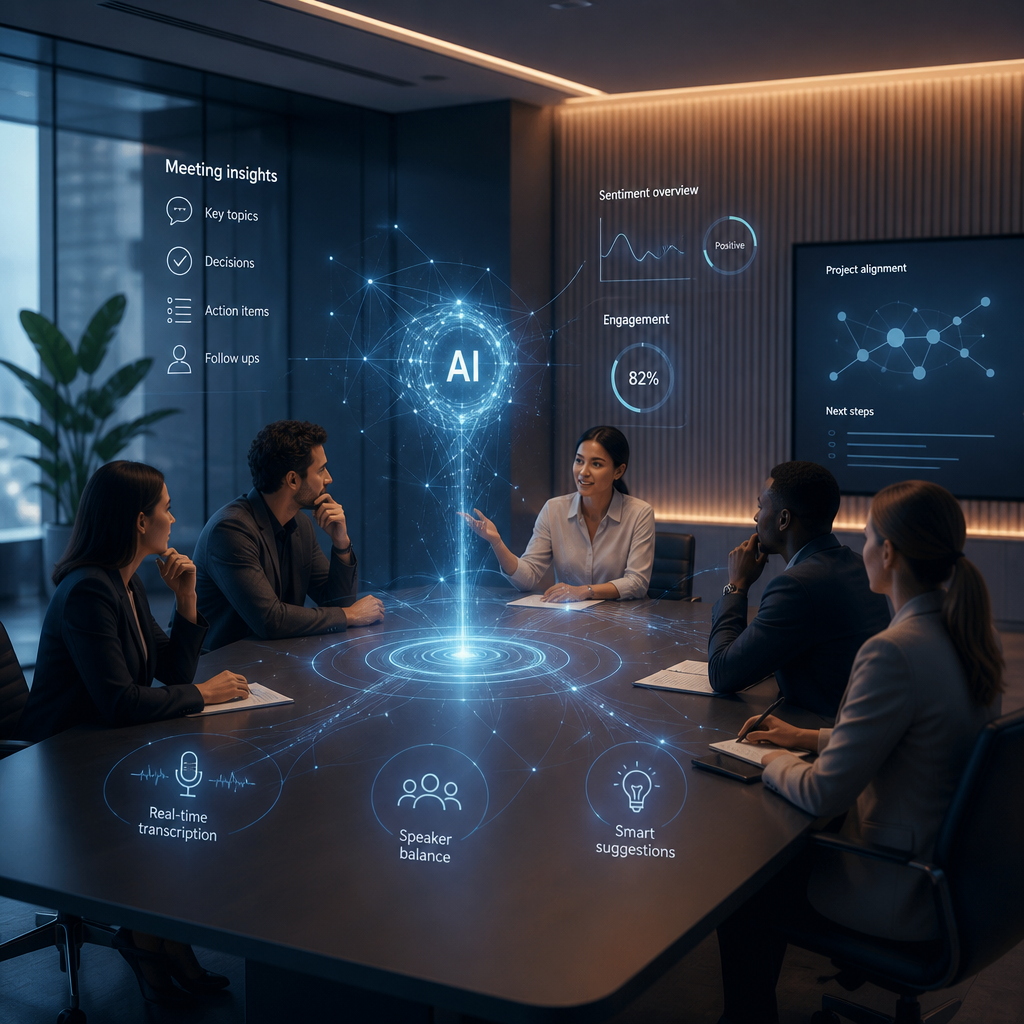
Historically, AI in meeting rooms often meant add-on features like automated transcription or basic participant counting. While valuable, these were largely passive. Today's AI meeting agents are different. They are designed to be proactive, intelligent entities that can:
- Monitor room health and environmental factors
- Generate comprehensive meeting summaries
- Track and assign action items in real-time
- Respond to voice commands for various tasks
- Provide AI-based video analytics to optimize room usage
This shift means AI is no longer just a tool for recording what happened; it's an integral part of managing the meeting experience itself, ensuring productivity and efficiency.
Reshaping Hybrid Collaboration
The integration of these advanced AI agents is particularly impactful for hybrid collaboration environments. As teams continue to blend in-person and remote participation, the complexity of ensuring equitable and effective meetings increases. AI agents can bridge gaps by:
- Ensuring all voices are heard and captured
- Automating administrative tasks, freeing participants to focus on discussion
- Providing insights into engagement and participation dynamics
- Facilitating seamless transitions between topics and presenters
This evolution moves AI from an "add-on" to a critical piece of the collaboration infrastructure, enabling more inclusive and productive interactions regardless of location.
Strategic Implementation and AV Integration
For enterprise decision-makers, IT managers, and corporate collaboration leaders, understanding this shift is crucial. Deploying AI meeting agents effectively requires a strategic approach that considers existing infrastructure and future needs. This often involves expert AV integration to ensure seamless operation with current meeting room technology, whether it's BYOD-ready setups or dedicated systems.
A consultative approach is vital to navigate the complexities of selecting and implementing these solutions. It's not just about choosing a product, but about understanding how AI agents can be tailored to specific organizational workflows and objectives, ensuring they deliver tangible outcomes without disruption.
Preparing for the Future of Meetings
The trajectory of AI in meeting environments points towards increasingly sophisticated and integrated solutions. As AI meeting assistants evolve into active agents, they promise to unlock new levels of efficiency and insight for organizations. By embracing this evolution thoughtfully and strategically, enterprises can ensure their collaboration spaces are future-ready, fostering productivity and innovation across all teams.